A Study of: The Old Testament
IT'S FOR US, RIGHT NOW!
“The Bible presents a total picture of the life of its characters. We can thus expect human frailties to appear. However, many of these human elements reveal genuine religious purposes when they are understood in terms of the social standards of their own day.
“The student who truly seeks to appreciate the Bible will study it always for the contribution of its message to our religious life today. It is not enough to be entertained by its stories unless these stories can reach deep into our souls to make better persons. The accounts in the Bible were preserved for the help which they can give to man in developing his faith in God and in following His teachings. The reader who misses the significance of Bible stories in present life is not a true student of the Bible.” (Larsen, in Jacob, The Message of the Old Testament, pp. xxxv–xxxvi.)
“Properly understood, the Scripture is all full of Christ, and all intended to point to Christ as our only Saviour. It is not only the law, which is a schoolmaster unto Christ, nor the types, which are shadows of Christ, nor yet the prophecies, which are predictions of Christ; but the whole Old Testament history is full of Christ. Even where persons are not, events may be types. If any one failed to see in Isaac or in Joseph a personal type of Christ, he could not deny that the offering up of Isaac, or the selling of Joseph, and his making provision for the sustenance of his brethren, are typical of events in the history of our Lord. And so indeed every event points to Christ, even as He is alike the beginning, the centre, and the end of all history—‘the same yesterday, and to-day, and for ever.’ One thing follows from this: only that reading or study of the Scriptures can be sufficient or profitable through which we learn to know Christ—and that as ‘the Way, the Truth, and the Life’ to us. And for this purpose we ought constantly to ask the aid and teaching of the Holy Spirit.” (Edersheim, Old Testament Bible History, pp. 2–3.)"
APPLYING TO LIFE
“Do you read the Scriptures, my brethren and sisters, as though you were writing them a thousand, two thousand, or five thousand years ago? Do you read them as though you stood in the place of the men who wrote them? If you do not feel thus, it is your privilege to do so, that you may be as familiar with the spirit and meaning of the written word of God as you are with your daily walk and conversation, or as you are with your workmen or with your households. You may understand what the Prophets understood and thought—what they designed and planned to bring forth to their brethren for their good.
“When you can thus feel, then you may begin to think that you can find out something about God, and begin to learn who he is.” (Brigham Young, in Journal of Discourses, 7:333.)"
- A frequently quoted scripture is Isaiah 55:8–9. Many times, however, we stop at those two verses and do not read them in their full context. Read now verses 10 and 11. What does the Lord mean when He says His way of doing things is not like man’s? (Note especially v. 11.) What does He mean when He says that His word “shall accomplish that which I please,” and how does that relate to the Old Testament? How would you now answer someone who says, “The Old Testament is too difficult; it needs to be simplified and made more plain”?
- Read again the second paragraph of Reading 1-3 and all of Reading 1-13. Ponder for a moment how we put ourselves in the place of the ancients and let the scriptures “reach deep into our souls” (Larsen, in Jacob, The Message of the Old Testament, p. xxxvi). List some practical things you can do to apply this concept in your own life as you study the Old Testament. Is this application what Nephi meant by “liken[ing] all scriptures unto us” (1 Nephi 19:23)?
- Moroni requested those who want to know for themselves the truthfulness of the gospel to “remember how merciful the Lord hath been unto the children of men, from the creation of Adam” (Moroni 10:3). Why did he make this request? What is there in the Old Testament message that is important for a person striving for a personal testimony? List four or five major practical concepts you could take from the Old Testament to learn to be a better Christian.
- President Spencer W. Kimball admonished:
“I urge all of the people of this church to give serious attention to their family histories, to encourage their parents and grandparents to write their journals, and let no family go into eternity without having left their memoirs for their children, their grandchildren, and their posterity. This is a duty and a responsibility, and I urge every person to start the children out writing a personal history and journal.” (“The True Way of Life and Salvation,” Ensign, May 1978, p. 4.)
If you have not already begun to keep your personal journal, now is an excellent time to do so. Make your study of the Old Testament a part of your journal. Record special insights, things that impress you, or just the feelings you may have as you study. You will find your study of the Old Testament greatly enhanced by your journal keeping and your journal keeping greatly enhanced by your study of the Old Testament.

The Creation is a model of how we create a new person...
WE ARE LIKE HIM
President Brigham Young said:
“Man is made in the image of his maker, . . . he is His exact image, having eye for eye, forehead for forehead, eyebrows for eyebrows, nose for nose, cheekbones for cheekbones, mouth for mouth, chin for chin, ears for ears, precisely like our Father in heaven.” (In Ludlow, Latter-day Prophets Speak, p. 278.)
Though President Young spoke of man, this word applies to both male and female. Latter-day prophets have commented on the existence of a mother in heaven. The First Presidency (Joseph F. Smith, John R. Winder, and Anthon H. Lund) stated this doctrine in 1909 in the following words: “All men and women are in the similitude of the universal Father and Mother, and are literally the sons and daughters of Deity.” (In Clark, Messages of the First Presidency, 4:203.)
Elder Joseph Fielding Smith, after quoting Genesis 1:26–27, also said, “Is it not feasible to believe that female spirits were created in the image of a ‘Mother in Heaven’?” (Answers to Gospel Questions, 3:144).
President Spencer W. Kimball spoke of the importance of having children:
“The first commandment recorded seems to have been ‘Multiply and replenish the earth.’ Let no one ever think that the command came to have children without marriage. No such suggestion could ever have foundation. . . .
“I have told many groups of young people that they should not postpone their marriage until they have acquired all of their education ambitions. I have told tens of thousands of young folks that when they marry they should not wait for children until they have finished their schooling and financial desires. Marriage is basically for the family, and when people have found their proper companions there should be no long delay. They should live together normally and let the children come.
“There seems to be a growing feeling that marriage is for legal sex, for sex’s sake. Marriage is basically for the family; that is why we marry—not for the satisfaction of the sex, as the world around us would have us believe. When people have found their companions, there should be no long delay. Young wives should be occupied in bearing and rearing their children. I know of no scriptures where an authorization is given to young wives to withhold their families and to go to work to put their husbands through school. There are thousands of husbands who have worked their own way through school and have reared families at the same time. Though it is more difficult, young people can make their way through their educational programs.” (“Marriage is Honorable,” in Speeches of the Year, 1973, pp. 262–63.)
THE FALL
The purpose of the events discussed in Genesis 3 was summed up by Lehi when he taught, “Adam fell that men might be; and men are, that they might have joy” (2 Nephi 2:25).
President Joseph Fielding Smith said: “Let’s thank the Lord, when we pray, for Adam. If it hadn’t been for Adam, I wouldn’t be here; you wouldn’t be here; we would be waiting in the heavens as spirits. . . .
“We are in the mortal life to get an experience, a training, that we couldn’t get any other way. And in order to become gods, it is necessary for us to know something about pain, about sickness, and about the other things that we partake of in this school of mortality"(In Conference Report, Oct. 1967, p. 122.).
“Had Adam and Eve not transgressed the law given in Eden, they would have had no children.
“Because of this transgression bringing mortality, the children of Adam and Eve inherited mortal bodies and became subject to the mortal death" (Man, His Origin and Destiny, pp. 50–51.).
SATAN IS TRULY A LIAR
“The devil in tempting Eve told a truth when he said unto her that when she should eat of the tree of knowledge of good and evil they should become as Gods. He told the truth in telling that, but he accompanied it with a lie as he always does. He never tells the complete truth. He said that they should not die. The Father had said that they should die. The devil had to tell a lie in order to accomplish his purposes; but there was some truth in his statement. Their eyes were opened. They had a knowledge of good and evil just as the Gods have. They became as Gods; for that is one of the features, one of the peculiar attributes of those who attain unto that glory—they understand the difference between good and evil.” (Cannon, Gospel Truth, 1:16.)
"Knew not the will of God" (John Milton, Paradise Lost
“Scant knowledge is available to us of Eve (the wife of Adam) and her achievements in pre-existence and in mortality. Without question she was like unto her mighty husband, Adam, in intelligence and in devotion to righteousness, during both her first and second estates of existence. She was placed on earth in the same manner as was Adam, the Mosaic account of the Lord creating her from Adam’s rib being merely figurative. (Moses 3:20–25.)
“Eve was the first woman; she became the mother of the whole human race, her very name signifying ‘mother of all living.’ (Moses 4:26; 1 Ne. 5:11.) . . ."
BLOOD
“Adam had a spiritual body until mortality came upon him through the violation of the law under which he was living, but he also had a physical body of flesh and bones.
“. . . Now what is a spiritual body? It is one that is quickened by spirit and not by blood. . . .
“. . . When Adam was in the Garden of Eden, he was not subject to death. There was no blood in his body and he could have remained there forever. This is true of all the other creations” (Joseph Fielding Smith, Doctrines of Salvation, 1:76–77).
JOY and SORROW
“He [Adam] had knowledge, of course. He could speak. He could converse. There were many things he could be taught and was taught; but under the conditions in which he was living at that time it was impossible for him to visualize or understand the power of good and evil. He did not know what pain was. He did not know what sorrow was; and a thousand other things that have come to us in this life that Adam did not know in the Garden of Eden and could not understand and would not have known had he remained there” (Smith, Doctrines of Salvation, 1:107–8).
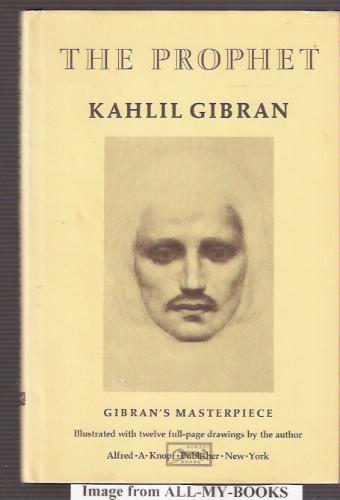
"Your joy is your sorrow unmasked. And the selfsame well from which your laughter rises was oftentimes filled with your tears . . . The deeper that sorrow carves into your being, the more joy you can contain . . . Is not the cup that holds your wine the very cup that was burned in the potter's oven? . . . Verily you are suspended like scales between your sorrow and your joy. Only when you are empty are you at standstill and balanced. When the treasure-keeper lifts you to weigh his gold and his silver, needs must your joy or your sorrow rise or fall" (Kahlil Gibran, The Prophet Alfred A. Knopf 2001 29).
TRANSGRESSION
“Now this is the way I interpret that: The Lord said to Adam, here is the tree of the knowledge of good and evil. If you want to stay here, then you cannot eat of that fruit. If you want to stay here, then I forbid you to eat it. But you may act for yourself, and you may eat of it if you want to. And if you eat it, you will die.
“I see a great difference between transgressing the law and committing a sin” (Joseph Fielding Smith, “Fall—Atonement—Resurrection— Sacrament,” in Charge to Religious Educators, 124).


No comments:
Post a Comment